Review scope: Nationwide, case-by-case equipment review. This guide does not promise purchase, price, testing, environmental classification, local presence, freight, or pickup.
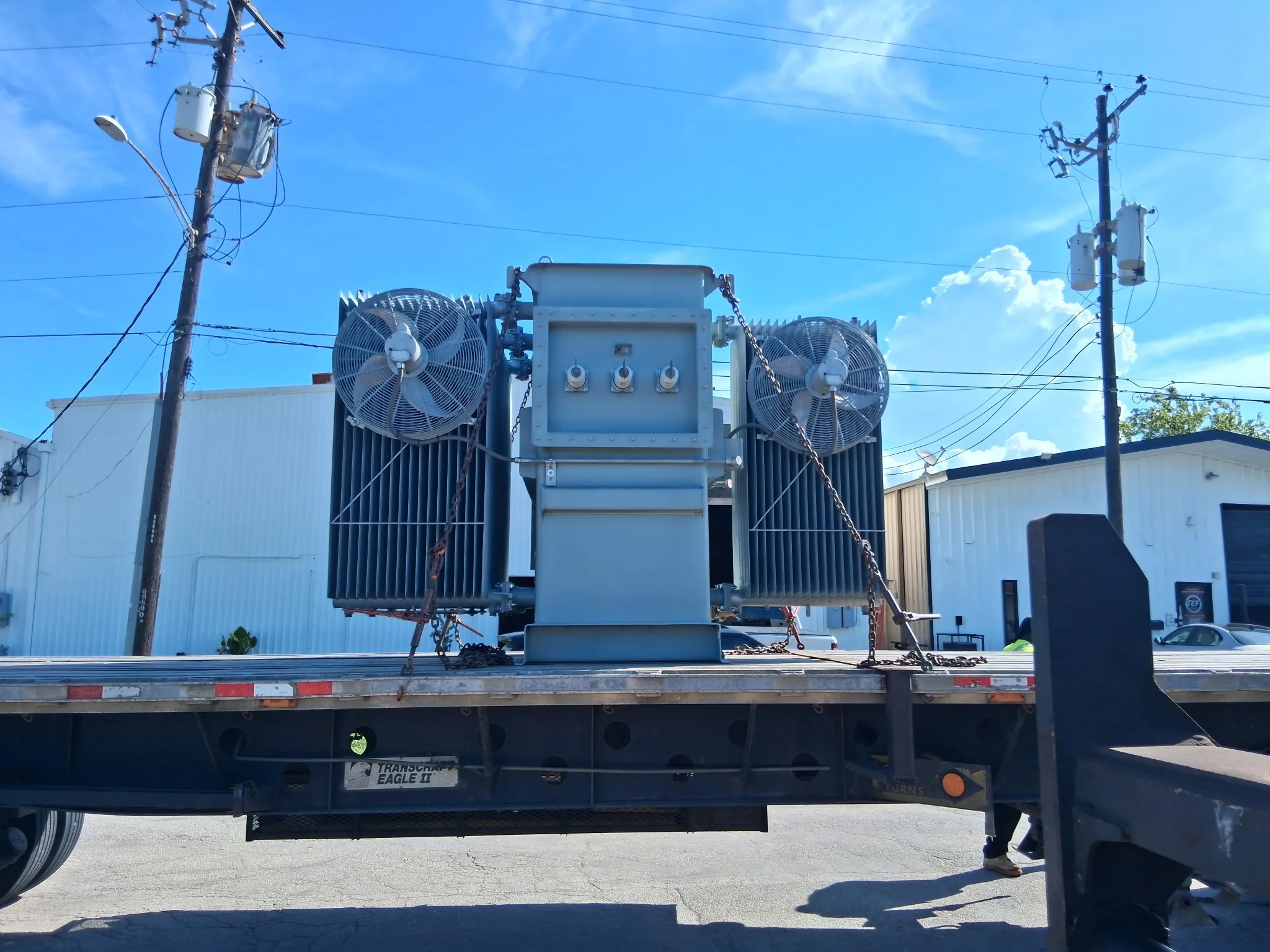
Substation configurations that change the review
Exterior shape and capacity alone do not establish interchangeability. Identify the actual construction and electrical arrangement shown by the equipment and its records.
- Liquid-immersed, two-winding step-down or step-up transformers used at utility, industrial, renewable, and large-commercial substations. Conservator, sealed-tank, radiator-bank, and fan- or pump-assisted cooling arrangements should be identified.
- Three-winding transformers with a tertiary, autotransformers, and generator step-up units. The tertiary voltage, grounding arrangement, and all winding ratings matter because they can be central to the next installation.
- Units with on-load or de-energized tap changers. Record the changer manufacturer/type, control cabinet, present position, known service history, and whether the mechanism and leads remain intact.
- Specialized substation equipment such as phase-shifting transformers, mobile units, and unit-substation transformers. Their custom controls, interface equipment, and transport design can make the review materially different from a conventional two-winding asset.
What can support potential reuse
Electrical match, not headline size
A recognizable manufacturer, legible serial number, familiar voltage classes, usable winding connection, compatible impedance, and a practical tap range give a reviewer far more to work with than a capacity rating alone. Cooling capability and frequency must align with the prospective duty.
Completeness preserves options
The transformer body, bushings, radiators, fans, pumps, conservator or preservation equipment, marshalling cabinet, control panels, current transformers, gauges, and tap-changer components should be described separately. Missing items can change the reuse path even where the active part appears intact.
Traceable history reduces uncertainty
Factory records, commissioning information, maintenance summaries, relay-event or fault history, oil records, and storage history help distinguish a planned replacement from an asset with an unresolved service issue. Provide records as records, not as a warranty of future performance.
More straightforward review situations
- A planned substation upgrade leaves an identified, intact transformer with a readable nameplate, accessible site, and organized service records.
- An industrial facility releases a conventional liquid-filled or dry-type substation transformer whose winding data, accessories, and removal status can be clearly documented.
- A utility, EPC contractor, or owner has a spare transformer with controlled storage history and documentation of its original application.
- A transformer is already safely disconnected by the owner’s qualified team, remains complete, and can be reviewed from photos and records before any removal scope is discussed.
Factors that can limit a reuse path
- Missing or unreadable nameplate, uncertain serial identity, or conflicting voltage and connection information.
- Undocumented liquid history, PCB-related markings, unidentified fluid, visible leakage, or records that suggest a regulatory issue requiring separate handling.
- Evidence or history of internal fault, fire, flood, mechanical impact, bushing damage, or long uncontrolled outdoor storage.
- Highly customized tertiary, phase-shifting, control, or protection arrangements; missing radiators, bushings, tap changer, or other essential equipment.
- Restricted access, energized surroundings, inadequate site information, or a removal concept that has not been developed by qualified professionals.
Specifications and documents to send
Copy ratings exactly as shown. Do not convert, round, or assume missing values. When available, include original drawings, manuals, service records, and photographs that connect the records to the serial-numbered asset.
- Manufacturer, model, serial number, build year if known, clear images of every nameplate, and the original application. Distinguish a substation/power transformer from a smaller distribution transformer; DOE’s distribution-transformer definition has specific voltage, frequency, and capacity boundaries.
- Rated power by cooling stage, frequency, high-/low-/tertiary rated voltages, winding connection/vector information, neutral availability, and basic impulse level (BIL) where shown. These define insulation and system-interface considerations.
- Percent impedance, tap range and increments, tap-changer type, present position, motor-drive/control details, and any known tap-changer service record. A voltage-regulation feature cannot be assumed interchangeable.
- Cooling designation and all associated equipment: radiators, fans, pumps, heat exchangers, gauges, conservator, nitrogen or other preservation equipment, and control cabinets. Power-transformer cooling arrangements vary by design.
- Insulation liquid type as labeled or documented; PCB labels, laboratory reports, fluid-maintenance records, spills, and regulatory correspondence, if any. Do not infer environmental status from age or appearance.
- Operating, shipping, and accessory weights where available; dimensions; lifting and jacking documentation; bushing shipping configuration; and a component inventory. These facts drive a site-specific freight and removal review.
Condition and completeness checks
- Photograph all sides, the nameplate, bushings, tank seams, radiators, underside where safely visible, gauges, control cabinets, tap-changer cabinet, and every label. Include wide photos showing clearances and access.
- State whether the unit is in service, disconnected, stored, or already removed; provide the reason for removal and dates of last energized service and storage, if known.
- Disclose visible oil staining or leakage, corrosion, dents, damaged porcelain or composite components, missing covers, open cable boxes, damaged cabinets, and signs of water entry without diagnosing the cause.
- Inventory what is physically included versus retained: bushings, radiators, fans, pumps, conservator, tap changer, controls, protection components, spare parts, manuals, and test/service records.
- Share available maintenance, fault, trip, inspection, oil-analysis, repair, and transport records. Do not drain, sample, open, energize, or alter equipment solely for a buyer inquiry; qualified parties and applicable requirements govern that work.
Use existing safe access only
Do not enter restricted electrical spaces, defeat locks, remove covers from energized or unknown equipment, sample fluid, or perform testing for this web review. The owner’s qualified personnel control electrical, environmental, and site-safety work.
Examples of useful seller submissions
Utility upgrade with an intact takeout
A utility replaces a conventional two-winding transformer during a capacity project. The seller sends nameplate photos, cooling-stage rating, impedance, tap-changer information, accessory list, service history, and site-access photos. That package allows an early review of reuse relevance and a separate discussion of whether removal and freight are feasible.
Plant closure with a unit-substation transformer
A manufacturer closes a facility and has an indoor transformer that served switchgear. The primary and secondary ratings, connection, dry-type or liquid-filled construction, enclosure, switchgear interface, manuals, and condition photos are more useful than a generic statement that it is “working.” The seller should identify which upstream/downstream equipment is excluded.
Three-winding spare from a renewable interconnect
An owner has a stored spare with a tertiary and on-load tap changer. The review package should show every winding rating and connection, the control and cooling components, storage/preservation history, and last-known maintenance record. A tertiary and OLTC can be important assets, but also require exact documentation.
Unknown-fluid legacy transformer
A demolition contractor finds an older liquid-filled unit with incomplete records and a concerning label or staining. The responsible approach is to preserve labels, take non-invasive photos, state what is unknown, and provide all available ownership and environmental records. It should not be represented as non-PCB, serviceable, or ready for transport without appropriate review.
Removal and freight information
- Nationwide review does not mean every asset has the same pickup or removal solution. Provide the site address, transformer location, present status, desired disposition date, and the responsible site contact.
- Describe access constraints factually: gate and road approach, turning or staging limits, overhead or nearby equipment, grade, floor or pad location, restricted hours, permits, union/site rules, and whether components are separated. Do not estimate a removal plan from photographs alone.
- Electrical isolation and site control remain the owner’s responsibility. OSHA requires appropriate deenergization, lockout/tagout, and qualified verification before exposed electrical equipment is treated as deenergized.
- Any lifting, disassembly, fluid handling, packaging, and transport plan should be scoped by qualified electrical, rigging, environmental, and heavy-haul professionals using manufacturer documents and site conditions. Freight may require a transformer body and accessories to be handled as separate loads.
- Keep labels, records, and fluid documentation with the asset file. PCB-related marks and records should be preserved and disclosed; applicable federal, state, and local obligations may affect any disposition path.
Frequently asked questions about substation transformers
Do you buy every substation or power transformer?
No. We conduct nationwide, case-by-case reviews. Electrical fit, configuration, completeness, condition as documented, environmental information, site access, timing, and freight practicality all affect whether we can pursue an opportunity. Submitting information does not guarantee a purchase, offer, or pickup.
Is MVA rating enough to request a review?
No. Send the full nameplate. Review depends on voltage and winding arrangement, frequency, impedance, taps, cooling, insulation level, transformer type, and physical configuration. A similarly sized transformer can still be unsuitable for a prospective application.
What should I send first?
Send legible nameplate and exterior photos, manufacturer and serial number, location, original application, current status, included-component list, known condition or event history, liquid/PCB-related documentation, records available, and access constraints. Clear unknowns are better than assumptions.
Can a transformer be reviewed if parts are missing?
Possibly, but list every excluded, removed, or damaged component. Bushings, radiators, fans, pumps, controls, preservation equipment, tap-changer equipment, and documentation can be material to a reuse evaluation and to transport planning.
How should PCB or fluid information be handled?
Do not guess or relabel. Preserve visible markings and provide existing fluid analyses, maintenance records, manifests, and correspondence. EPA rules address marking and disposal of PCB transformers and liquids; regulatory status and handling obligations may require specialized review independent of any equipment purchase discussion.
Technical and safety references
These government, regulatory, and manufacturer references support the technical and safety context above. They do not inspect the submitted transformer, endorse this business, determine regulatory status, or replace qualified professional review.
- U.S. Department of Energy — Distribution TransformersDefines the federal distribution-transformer category and its scope, useful for distinguishing it from larger substation/power equipment.
- U.S. EPA — PCB Contamination in Used Oil Fact SheetSupports cautious treatment of transformer liquid records and the consequences of PCB-contaminated oil.
- eCFR — 40 CFR 761.40, PCB Marking RequirementsSupports preservation and disclosure of PCB transformer and location markings.
- eCFR — 40 CFR 761.60, PCB Disposal RequirementsSupports the caution that PCB transformers and liquids can be subject to specialized disposal requirements.
- OSHA — 29 CFR 1910.333, Selection and Use of Work PracticesSupports the deenergization, lockout/tagout, and qualified verification safety framing for fixed electrical equipment.
- OSHA — 29 CFR 1926.251, Rigging Equipment for Material HandlingSupports inspection, identification, and rated-capacity requirements for rigging equipment used in material handling.
- Siemens Energy — Power TransformersManufacturer reference supporting the relevance of voltage range, power rating, cooling system, customized design, and specialized power-transformer configurations.