Review scope: Nationwide, case-by-case equipment review. This guide does not promise purchase, price, testing, environmental classification, local presence, freight, or pickup.
Three-phase configurations that change the review
Exterior shape and capacity alone do not establish interchangeability. Identify the actual construction and electrical arrangement shown by the equipment and its records.
- Low-voltage dry-type units, including ventilated enclosed units and non-ventilated or encapsulated designs, are commonly distinguished by enclosure condition, ventilation path, primary/secondary voltage combination, and whether neutral capability is present.
- Liquid-filled pad-mounted three-phase transformers should be identified as compartmental live-front or dead-front designs where known, along with the dielectric fluid stated on the nameplate or records. Do not infer fluid type from appearance.
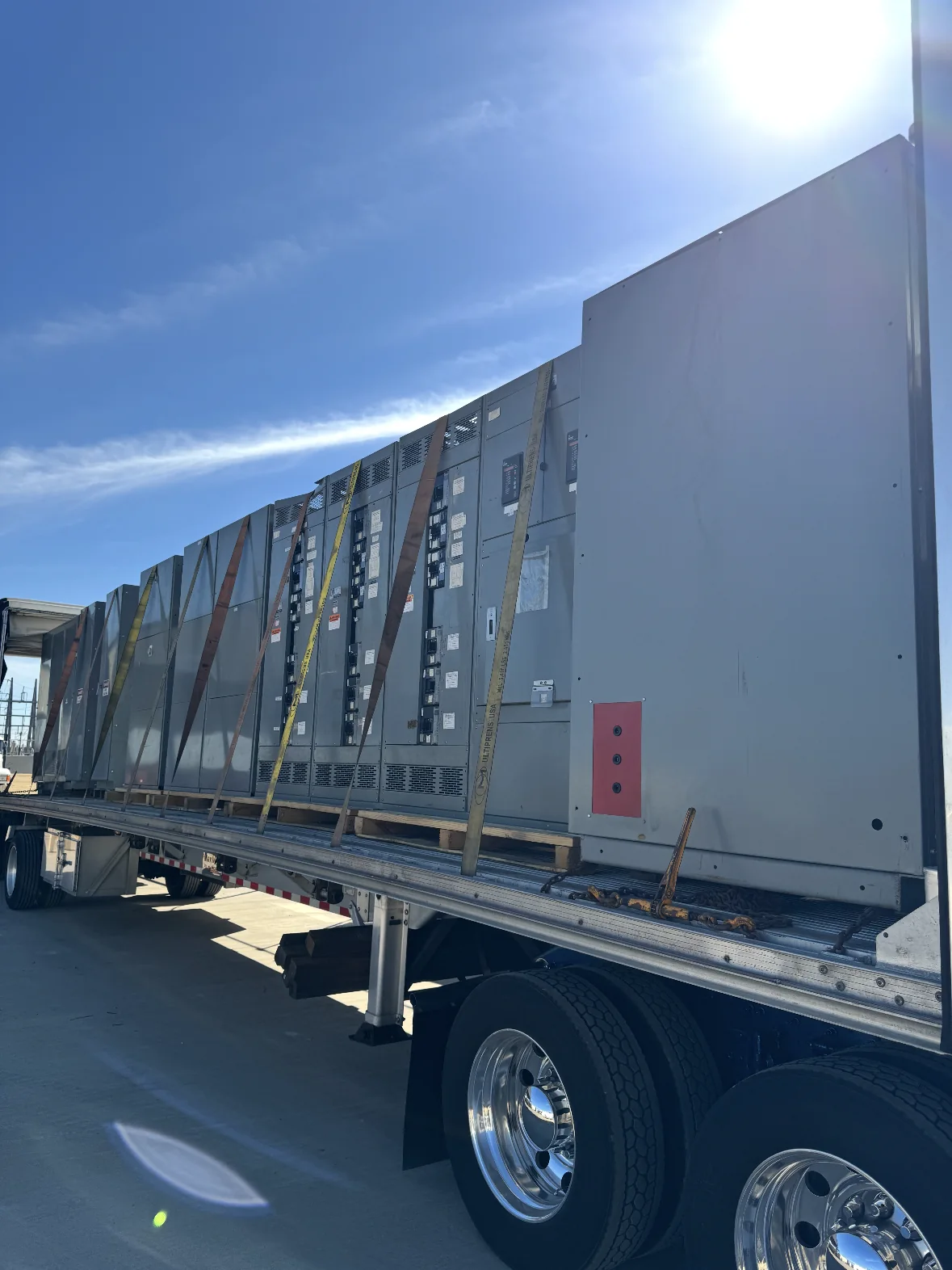
- Unit-substation, indoor power-center, and primary-selective assemblies may combine a transformer with primary switching, secondary gear, or protective devices. Photograph and list the complete assembly and identify what is included versus retained.
- Winding arrangements such as delta-delta, delta-wye, wye-delta, and wye-wye are not interchangeable. The available neutral, phase diagram, vector information, and grounding arrangement materially affect a reuse match.
- A factory-built three-phase transformer and a bank of three single-phase transformers are different assets. For a bank, identify each serial-numbered unit and whether the three units remain matched and complete.
What can support potential reuse
Electrical compatibility comes first
The most useful candidate is one whose primary and secondary voltage, kVA, frequency, connection, neutral arrangement, taps, impedance, and BIL can be read from a legible nameplate. These details establish whether the transformer can fit a prospective distribution system without guessing.
Configuration can preserve application value
A standard dry-type step-down unit has different reuse pathways from a pad-mounted medium-voltage unit, a solar step-up design, or a transformer integrated with switchgear. Original manufacturer, catalog number, drawings, and accessory list help distinguish an ordinary unit from a purpose-built configuration.
Traceable history reduces uncertainty
The reason for removal, service location, approximate service history, known faults, and any existing maintenance or electrical reports give reviewers context. Provide records as records; do not represent an unverified transformer as tested, operational, or suitable for a particular service.
Complete, protected equipment is easier to evaluate
Intact bushings or terminals, doors, gauges, radiators, fans, lugs, tap hardware, relief devices, and factory labels help preserve the identity and condition of the asset. Missing or separately stored parts should be listed rather than assumed included.
Fluid and PCB documentation matters for liquid units
For oil-filled equipment, available fluid records, labels, sampling history, and removal paperwork are important review inputs. EPA rules include specific PCB assumptions tied to fluid type and manufacturing date; unknown information should be described as unknown, not guessed.
More straightforward review situations
- Clearly identified dry-type transformers with legible nameplates, common voltage relationships, intact enclosures, and documented removal from service.
- Liquid-filled three-phase pad-mounted units with an identifiable manufacturer and serial number, intact compartments, visible accessory completeness, and available fluid documentation.
- Complete unit-substation transformer sections when the transformer rating, included primary/secondary equipment, and site separation plan are all documented.
- Matched three-unit banks when individual ratings, polarity/connection information, serial numbers, and the reason the bank was kept together are available.
Factors that can limit a reuse path
- No readable nameplate, catalog number, or serial number; photographs of a similar unit are not a substitute for asset identification.
- Unusual voltage, winding connection, frequency, impedance, or custom auxiliary arrangement that limits likely interchangeability.
- Evidence of major impact, severe corrosion, overheating, fire exposure, compromised coils, active liquid leakage, or unknown liquid status.
- Missing bushings, terminals, covers, gauges, radiators, fans, tap components, compartment hardware, or integrated switchgear needed to describe the offered asset.
- An energized, inaccessible, embedded, or still-connected unit without a facility-approved plan and qualified parties responsible for isolation and removal.
Specifications and documents to send
Copy ratings exactly as shown. Do not convert, round, or assume missing values. When available, include original drawings, manuals, service records, and photographs that connect the records to the serial-numbered asset.
- Manufacturer, catalog/model number, serial number, year if shown, and clear photos of every nameplate and warning or fluid label.
- Three-phase kVA rating; primary and secondary nominal voltages; frequency; full winding connection/phase diagram; neutral and grounding information where marked.
- Tap range and present tap position, plus whether the unit has de-energized taps or a load tap changer. Do not operate taps solely to prepare a listing.
- Impedance, BIL, temperature rise, insulation class, cooling designation, winding conductor material if marked, and sound or efficiency information when shown.
- Dry-type enclosure style and indoor/outdoor rating, or liquid-filled tank style, front configuration, dielectric fluid identification, and documented PCB-related records if available.
- Dimensions, nameplate or drawing weight, lifting/center-of-gravity drawing if available, mounting arrangement, and all accessories or integral protective devices.
- Removal reason, dates placed in and out of service if known, prior repairs, storage setting, known defects, and copies of existing—not newly promised—maintenance records.
Condition and completeness checks
- Take current, well-lit exterior photographs from all sides, including bottom-area access where safely visible, doors closed and open only if the facility permits safe access, and close-ups of labels, terminals, bushings, gauges, and damage.
- For dry-type units, record visible dust accumulation, debris, discoloration, coil damage, loose panels, corrosion, water exposure, and whether vents appear obstructed. Do not enter the enclosure or touch internal parts to document it.
- For liquid-filled units, note visible seepage, tank or radiator damage, corrosion, gauge observations, damaged bushings, and the condition of closures. Do not open the tank, remove a plug, sample, drain, or transfer fluid for a sale inquiry.
- Reconcile what is on the unit with the bill of lading, drawings, and separately stored accessories. A precise missing-parts list is more useful than a general statement that it is complete.
- Provide safe commercial documentation: ownership or authority-to-sell confirmation, any lien-release process, asset release requirements, decommissioning records, and known environmental labels or reports. Protect site security by redacting account numbers, access codes, and sensitive one-line diagrams.
Use existing safe access only
Do not enter restricted electrical spaces, defeat locks, remove covers from energized or unknown equipment, sample fluid, or perform testing for this web review. The owner’s qualified personnel control electrical, environmental, and site-safety work.
Examples of useful seller submissions
Facility modernization: indoor dry-type step-down transformer
A manufacturer removes a ventilated three-phase dry-type transformer during a building upgrade. The seller submits a sharp nameplate photo showing the 480 V delta primary and 208Y/120 V secondary, kVA, taps, temperature rise, serial number, and enclosure rating, along with photos of coils, panels, lugs, and the loading path. The removal reason and an existing inspection report are included. This package allows an electrical compatibility and condition review without claiming present performance.
Pad-mounted unit released from a commercial site
A property owner has a liquid-filled, dead-front pad-mounted transformer after a service redesign. The submission distinguishes the transformer from the service equipment, shows the whole cabinet and tank, labels, gauges, bushings, radiators, and any visible seepage, and attaches prior fluid documentation. The seller identifies access across the property and confirms that qualified parties—not the buyer review—will control deenergization and any removal work. EPA-related status remains subject to the available records and applicable requirements.
Unit substation with uncertain included equipment
A warehouse is selling a transformer section next to primary switchgear and secondary distribution gear. Rather than label it a complete substation, the seller provides a one-line excerpt with sensitive details redacted, a boundary diagram, catalog numbers for each section, and a list of equipment retained. That separates the transformer review from the switchgear review and prevents an assumed inclusion of breakers, cables, or controls.
Three-unit bank from a utility-related project
A project has three separate single-phase transformers said to have served a three-phase load. The seller photographs every nameplate, records each serial number and rating, identifies how they were connected, and notes whether all three were removed together. A matched bank may merit review, while a mixture of unmatched units or unknown polarity/connection information presents a more difficult reuse question.
Removal and freight information
- Removal planning begins with the exact site: indoor or outdoor location, floor or pad level, doorway and aisle constraints, dock or ground access, route obstructions, nearby energized equipment, and the equipment that will remain. Photos and a simple site sketch are useful.
- Use the nameplate weight or manufacturer drawing, not an estimate, for preliminary freight and handling review. For liquid-filled pad-mounted units, the tank contains most of the assembly weight; dimensions and center-of-gravity information may affect carrier and contractor planning.
- The seller or facility should have qualified electrical personnel and appropriately contracted removal providers determine isolation, lockout/tagout, verification, disconnection, rigging, and any required permits. OSHA requires deenergized fixed equipment to be locked out or tagged before exposure to parts, with verification by a qualified person; a review request is not a removal procedure.
- Keep transformer doors, covers, bushings, gauges, radiators, and accessories protected during any facility-authorized preparation. Do not dismantle, drain dielectric fluid, cut conductors, or alter the equipment merely to make transport appear simpler.
- Describe available loading capability and whether freight access is uncertain; it will be considered with the asset, route, timing, packaging needs, and site conditions. Nationwide review does not mean pickup is available for every transformer or location.
Frequently asked questions about three-phase transformers
What should I send first for a three-phase transformer review?
Start with readable nameplate photographs, overall current photos, manufacturer/model/serial information, configuration, known condition, location, and basic loading access. For liquid-filled units, include any existing fluid, PCB, and removal documentation. Clear facts are more helpful than conclusions about value or operability.
Does a legible nameplate matter if the transformer looks clean?
Yes. Appearance cannot establish voltage compatibility, winding connection, kVA, taps, impedance, or BIL. The nameplate and phase diagram are central to identifying a three-phase transformer for potential reuse. If a plate is damaged, manufacturer records, drawings, or prior maintenance documents may help, but should be identified as supporting records.
Can I describe an oil-filled transformer as non-PCB because it has mineral oil?
No. Do not make an environmental classification from appearance or a general fluid description. EPA regulations set assumptions for certain electrical equipment based on date, fluid type, and available concentration information. Supply labels and documentation you have, state what is unknown, and have applicable compliance questions addressed through the appropriate qualified channels.
Will you test the transformer or provide a price before removal?
A submission can be reviewed from documentation and condition information, but review does not promise testing, a price, or a purchase. Existing test and maintenance records may be considered alongside nameplate data, configuration, condition, completeness, site access, and potential reuse fit.
Can every approved-looking transformer be picked up nationwide?
No. Each possible transaction is site- and asset-specific. Freight feasibility depends on verified dimensions and weight, access, protection needs, equipment completeness, timing, and a facility-controlled safe removal plan. A nationwide review process is not a promise of local offices, universal pickup, or removal service.
Technical and safety references
These government, regulatory, and manufacturer references support the technical and safety context above. They do not inspect the submitted transformer, endorse this business, determine regulatory status, or replace qualified professional review.
- Electronic Code of Federal Regulations, 10 CFR Part 431, Subpart K—Distribution TransformersFederal definitions and energy-conservation framework for distribution transformers, including distinctions in phase, insulation type, rating, voltage, and BIL.
- Electronic Code of Federal Regulations, 40 CFR Part 761—Polychlorinated BiphenylsEPA PCB requirements and concentration assumptions relevant to transformer manufacturing date, dielectric fluid, marking, use, storage, and documentation.
- OSHA, 29 CFR 1910.333—Selection and Use of Work PracticesRequirements for deenergizing, lockout/tagout, and qualified-person verification before work on or near exposed deenergized electrical parts.
- Eaton, Three-Phase Pad-Mounted TransformerManufacturer reference for three-phase pad-mounted configurations, voltage and kVA ranges, live-front/dead-front arrangements, dielectric-fluid options, and accessories.
- Eaton, Three-Phase Pad-Mounted Compartmental-Type Transformer Installation and Maintenance InstructionsManufacturer guidance that transformer weight appears on the nameplate and that receiving/exterior inspection should address shipped parts, damage, seals, and insulating-liquid seepage.
- Schneider Electric, Low-Voltage Dry-Type Transformers—InstallationManufacturer guidance on comparing dry-type nameplate data to drawings, nameplate phase diagrams and taps, visual checks, enclosure suitability, and qualified electrical work practices.