Review scope: Nationwide, case-by-case equipment review. This guide does not promise purchase, price, testing, environmental classification, local presence, freight, or pickup.
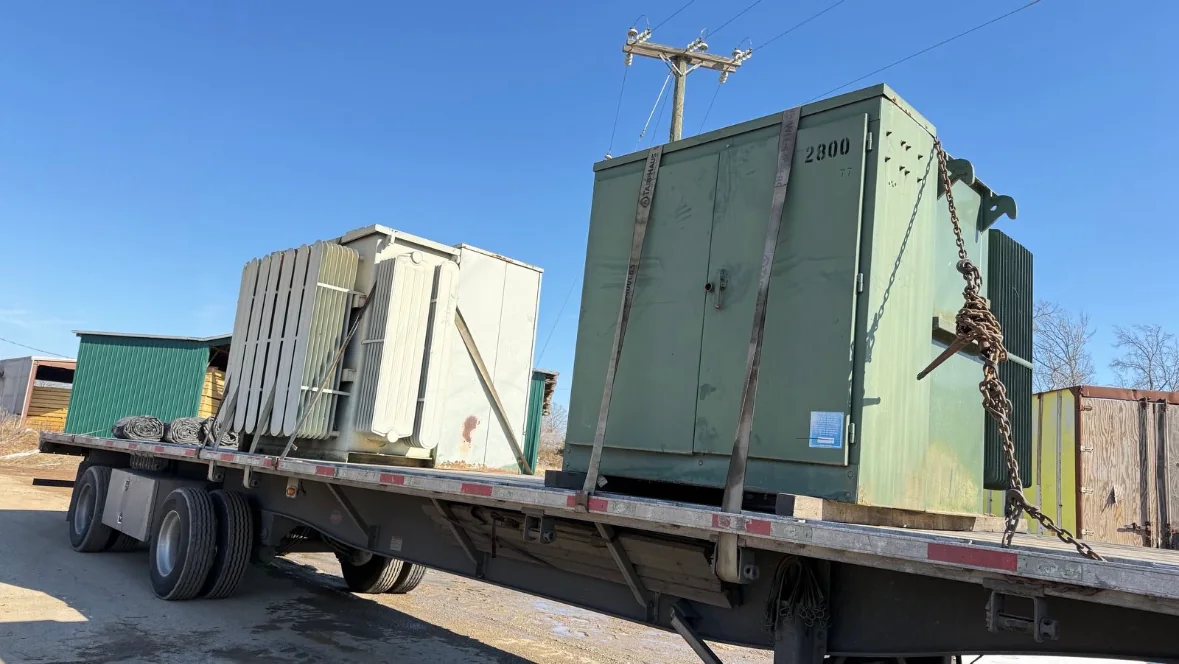
Pole-mounted configurations that change the review
Exterior shape and capacity alone do not establish interchangeability. Identify the actual construction and electrical arrangement shown by the equipment and its records.
- Conventional single-phase overhead transformers are liquid-filled distribution units with a high-voltage side and low-voltage bushings. Their listed kVA, voltage ratio, taps, insulation level, fluid, and bushing layout must be assessed together rather than inferred from tank size.
- Completely self-protected (CSP) units may incorporate protective components such as an internal protective link, arrester, or low-voltage breaker. Identify the exact model and photograph the protective devices; a conventional unit should not be described as CSP merely because it was installed near external cutouts or arresters.
- A three-phase overhead installation may comprise a bank of single-phase units or a dedicated three-phase pole-mount transformer. For a bank, submit every serial number, individual nameplate, physical position, and any available connection drawing, since an incomplete or mismatched bank changes the reuse review.
What can support potential reuse
Traceable electrical match
Manufacturer, model, serial number, phase, frequency, kVA, primary and secondary ratings, tap information, and insulation/BIL data let reviewers compare a unit with plausible distribution applications. A legible nameplate is more useful than a verbal estimate of size or voltage.
Fluid and regulatory record
State the fluid shown on the nameplate or records and provide any PCB label, laboratory result, service record, or disposal documentation that already exists. Do not represent a unit as non-PCB solely because it lacks a label or appears newer; PCB requirements apply to dielectric fluids and PCB Items under 40 CFR Part 761.
Completeness and physical integrity
Intact bushings, terminals, cover, seals, lift points, hanger brackets, and manufacturer identification support a clearer reuse assessment. Disclosed leaks, missing components, impact damage, corrosion, or evidence of overheating do not automatically decide an outcome, but they materially narrow the review.
More straightforward review situations
- Identified, owner-released conventional overhead units retired during a utility or private-distribution upgrade, with legible nameplates, service history when available, intact mounting hardware, and accessible photographs, are typically easier to review for a potential reuse path.
- A complete group of matching single-phase units from one documented bank can be more straightforward to evaluate than unrelated singles, provided the seller identifies each unit and preserves the bank relationship.
- Surplus kept in covered, orderly storage with protected bushings, serial-number records, and known fluid documentation provides better review information than equipment whose history cannot be reconstructed.
Factors that can limit a reuse path
- A missing or unreadable nameplate, altered serial number, or unclear ownership/release limits identification and compatibility review. Do not remove tags or clean an energized or unsafe unit to obtain details.
- Unknown dielectric-fluid status, PCB markings or records that conflict, visible leakage, fire exposure, a ruptured or severely dented tank, or opened compartments require more cautious case-specific review; no environmental conclusion should be assumed from photographs.
- A unit still mounted on a pole, inaccessible behind active facilities, attached to unknown conductors, or located where a lifting vehicle cannot be staged has a different logistics profile from a verified deenergized unit already at ground level.
Specifications and documents to send
Copy ratings exactly as shown. Do not convert, round, or assume missing values. When available, include original drawings, manuals, service records, and photographs that connect the records to the serial-numbered asset.
- Photograph the full nameplate and record manufacturer, model/catalog number, serial number, manufacturing date if shown, phase, frequency, kVA, and all listed ratings. Include images that make stamped information readable rather than transcribing uncertain characters.
- Record rated primary voltage, primary connection if listed, tap positions/range, high-voltage BIL or insulation level, and bushing count and arrangement. These determine whether a prospective reuse application can match the unit’s high-side system.
- Record every rated secondary voltage, wire/terminal arrangement, neutral or center-tap notation, low-voltage BIL where listed, and any impedance and temperature-rise markings. A transformer with an otherwise familiar kVA rating may still be unsuitable when its secondary configuration differs.
- Identify liquid type from the nameplate or records, such as electrical-grade mineral oil or natural ester, without guessing. Preserve and share existing PCB labels, analysis, spill history, or service documentation; only appropriate qualified parties should perform any sampling or electrical work.
- Note design and protection details visible on the unit: conventional or CSP marking, externally mounted accessories, surge arrester/cutout relationship, lifting lugs, hanger brackets, and RUS, IEEE, ANSI, or NEMA markings. These details distinguish product configuration and installation context.
Condition and completeness checks
- From a safe, ground-accessible position, photograph all tank sides, cover, seams, drain or fill areas, bushings, terminals, lift lugs, and hanger brackets. Report oil staining, active-looking leaks, denting, rust-through, cracked porcelain or polymer, loose/missing hardware, or heat/fire evidence as observed—not as a diagnosis.
- Confirm whether high- and low-voltage bushings, terminal hardware, protective-device components, cover hardware, grounding provisions, and pole-mount brackets remain with the transformer. Describe cut leads, broken bushings, removed accessories, or open ports rather than attempting repairs or disassembly.
- Provide available records of installation, removal reason, inspections, maintenance, oil work, prior electrical tests, or storage conditions, and distinguish records from assumptions. Manufacturer routine tests at production are not a current-condition determination, and a buyer review does not include promised testing.
- Include an ownership contact and a simple statement that the seller is authorized to offer the equipment. If utility-owned assets, easements, co-owner interests, or contractor custody are involved, resolve authority before presenting the equipment as surplus.
Use existing safe access only
Do not enter restricted electrical spaces, defeat locks, remove covers from energized or unknown equipment, sample fluid, or perform testing for this web review. The owner’s qualified personnel control electrical, environmental, and site-safety work.
Examples of useful seller submissions
Utility changeout inventory
A cooperative retires a group during a feeder modernization project. The seller submits a spreadsheet linking each serial number to a nameplate photo, unit location, conventional/CSP type, fluid documentation, removal date, and ground-staging status. This lets the reviewer consider individual units while recognizing that a batch does not create a blanket purchase commitment.
Three-unit bank from a private campus
A campus replaces an overhead bank during a service reconfiguration. Rather than advertising “one three-phase transformer,” the facilities team photographs and lists all three single-phase units, identifies their former bank positions and secondary connection records, and notes whether any unit differs. The bank can then be reviewed as a related set and as individually identified equipment.
Contractor-held unit with uncertain title
A contractor has a pole transformer left after a project but cannot confirm whether it belongs to the utility, owner, or another contractor. The prudent submission pauses before valuation and supplies the project contact and available release information. The transformer should not be moved, opened, or marketed as surplus until authority is clear.
Weathered unit with unknown fluid history
A stored transformer has tank corrosion, faded markings, and no available oil records. The seller provides candid photos of labels, leaks, and storage conditions, reports the history as unknown, and does not infer PCB status or take a sample personally. The uncertain documentation and condition become defined review constraints rather than undisclosed assumptions.
Removal and freight information
- Do not climb, disconnect, open, drain, sample, deenergize, or rig a pole-mounted transformer for a sale inquiry. Work on or near distribution equipment must be planned and performed by appropriately qualified parties under the applicable owner procedures and safety requirements.
- Tell reviewers whether the unit is still pole-mounted, already deenergized and removed, or staged at ground level; provide the site city/state, access constraints, approximate release window, and safe ground-level photos. Nationwide review does not mean a local office, removal crew, or pickup is available at every site.
- For any eventual move, preserve the manufacturer’s handling/shipping documentation and stated weight if available, keep bushings and exposed terminals protected, and disclose fluid condition or leakage concerns. The site owner and qualified transport/lifting providers must determine the applicable plan, equipment, permits, and regulatory requirements.
- Do not estimate lifting capacity from a tank label or assume existing lugs, brackets, a pole, or a trailer are suitable for a particular operation. OSHA crane rules require use within rated capacity and reliance on applicable manufacturer procedures; logistics are reviewed separately for each location.
Frequently asked questions about pole-mounted transformers
Does a nationwide review mean you will buy my transformer?
No. Each submission is reviewed individually. Review does not promise purchase, a price, testing, environmental classification, removal, freight, or pickup. Equipment identification, condition, ownership, location, and logistics all affect whether a next step is appropriate.
What should I send for an initial pole-mount transformer review?
Send safe, readable photos of the nameplate and all accessible sides; manufacturer, serial, ratings, configuration, fluid and PCB-related records if available; condition notes; ownership/release contact; quantity; city/state; and whether the unit remains pole-mounted or is at ground level. Never create an unsafe condition to collect information.
Can I submit a three-transformer bank as one item?
Yes, but identify every unit separately. Include each nameplate and serial number, the former bank position or connection record if available, and whether all hardware and protective components are present. Matching tanks alone do not establish electrical compatibility.
How do I determine whether the transformer is non-PCB?
Use existing labels, fluid documentation, and qualified laboratory or service records where available. Do not treat age, appearance, a missing label, or a seller’s recollection as proof. EPA PCB rules govern marking, use, storage, and disposal considerations, so uncertain status should be disclosed exactly as unknown.
Can you arrange pole removal or freight?
Possible logistics are considered case by case after equipment and site information are reviewed; universal pickup is not offered. The owner must use appropriate qualified electrical and lifting professionals to evaluate any energized-equipment, pole, access, environmental, and transport conditions.
Technical and safety references
These government, regulatory, and manufacturer references support the technical and safety context above. They do not inspect the submitted transformer, endorse this business, determine regulatory status, or replace qualified professional review.
- U.S. Department of Energy — Distribution TransformersFederal distribution-transformer definition, covered ratings context, and DOE standards framework.
- eCFR — 10 CFR Part 431, Subpart KDOE distribution-transformer test procedure, liquid-immersed reference conditions, and current efficiency-regulation context.
- eCFR — 40 CFR Part 761, PCBsPCB applicability, transformer use/storage provisions, and PCB-transformer marking requirements.
- OSHA — 29 CFR 1910.269, Electric Power Generation, Transmission, and DistributionQualified-employee training, job briefing, information transfer, and determining existing equipment conditions before work.
- OSHA — 29 CFR 1926.1417, Crane OperationManufacturer procedures, rated-capacity compliance, load-weight verification, and operational safety considerations for lifting planning.
- Eaton — Conventional Single-Phase Overhead TransformerManufacturer description of conventional pole-mounted transformer construction, liquid options, voltage/kVA product range, mounting hardware, and relevant configuration features.
- Prolec Energy — Pole-Type TransformersManufacturer reference for single-phase pole-type utility application, conventional versus self-protected options, fluid options, mounting hardware, and routine production tests.