Review scope: Nationwide, case-by-case equipment review. This guide does not promise purchase, price, testing, environmental classification, local presence, freight, or pickup.
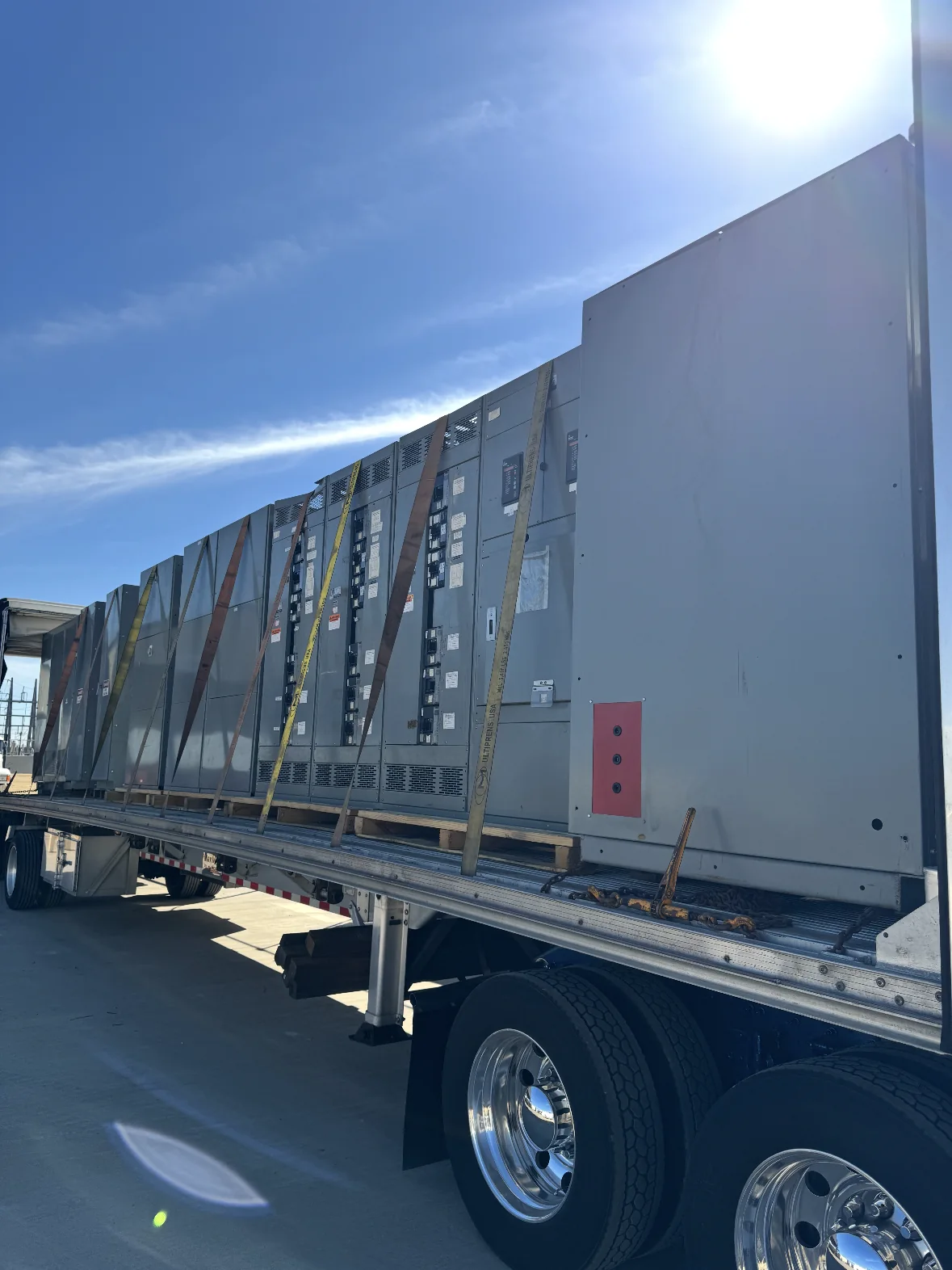
Dry-type configurations that change the review
Exterior shape and capacity alone do not establish interchangeability. Identify the actual construction and electrical arrangement shown by the equipment and its records.
- Ventilated low-voltage general-purpose units, typically with an open core-and-coil assembly protected by a vented enclosure; these are commonly used for building distribution and require review of enclosure condition and airflow paths.
- Encapsulated or resin-insulated dry-type units, including units intended for damp, dirty, or outdoor-rated applications; the insulation system, enclosure rating, and any resin cracking are material to review.
- Cast-coil medium-voltage transformers, often paired with indoor substations or switchgear; primary-voltage class, BIL, taps, termination design, and documented accessories are especially important.
- Single-phase and three-phase isolation, step-up, step-down, and specialty arrangements. Drive, rectifier, grounding, welding, and other application-specific designs should be identified rather than described generically as a distribution transformer.
What can support potential reuse
Electrical compatibility begins with the complete nameplate
The review needs the manufacturer, catalog/model and serial number, kVA, phase, frequency, primary and secondary voltage, winding connection, neutral arrangement, tap range, impedance, cooling designation, temperature-rise or insulation information, and ratings shown. A 480 V delta to 208Y/120 V transformer serves a very different reuse need from a unit with an uncommon ratio, no neutral, unusual taps, or special impedance.
Construction and installed environment shape reuse potential
Identify whether the unit is ventilated, encapsulated, or cast coil; the enclosure type and indoor/outdoor designation; copper or aluminum windings if marked; and installed location. Original manuals, submittals, one-line drawings, and photos of terminations help distinguish a standard distribution unit from a custom, transit, drive, or other special-duty design. DOE’s distribution-transformer definition also excludes several special transformer categories.
Completeness preserves the ability to evaluate the unit
A legible nameplate, enclosure panels and guards, terminal hardware, neutral or ground provisions where supplied, fans, temperature controls, weather shields, vibration pads, and OEM accessories should be photographed and listed as present, absent, or unknown. Do not substitute a visual guess for a missing identity plate. Missing covers or hardware can change both the practical reuse path and freight preparation.
Documented history is more useful than a claim of working condition
Provide the decommission reason, last known energized date, load application, maintenance and commissioning records if available, and any known faults, alarms, repairs, water exposure, fire/smoke exposure, or damage. Existing records can inform review, but they do not obligate the buyer to test, certify, or accept the equipment.
More straightforward review situations
- Complete, clearly identified standard-distribution units removed during a planned electrical upgrade, with matching nameplate, model/serial information, accessible location, and candid service history.
- Indoor ventilated or encapsulated equipment stored dry after decommissioning, with intact enclosure, terminals, and protective parts documented in photographs.
- Cast-coil or other higher-specification units accompanied by OEM drawings, rating data, tap information, accessories list, and a defined removal route.
Factors that can limit a reuse path
- Missing, painted-over, or unreadable nameplates; unknown voltage ratio or connection; undocumented custom windings; and transformer types designed for highly specific loads can limit reuse review.
- Cracked resin, burned odor, visible overheating, damaged leads, corrosion, heavy contamination, pest intrusion, water exposure, missing enclosures, or missing terminal parts require careful disclosure and may make an offer impractical.
- Restricted electrical-room access, unknown weight or dimensions, live adjacent equipment, unclear ownership, or an undefined loading path can prevent a pickup plan from being considered.
Specifications and documents to send
Copy ratings exactly as shown. Do not convert, round, or assume missing values. When available, include original drawings, manuals, service records, and photographs that connect the records to the serial-numbered asset.
- Clear photos of every nameplate, warning label, catalog/model number, serial number, and date code; include OEM literature or submittal sheets when available.
- kVA, phase, hertz, primary and secondary voltages, each winding connection (delta, wye, or other shown configuration), neutral availability, and polarity/vector information where marked.
- Tap positions and range, impedance, insulation class, BIL for medium-voltage equipment, cooling class, temperature-rise marking, and fan-forced rating if the unit is equipped for it.
- Enclosure type, indoor/outdoor designation, dimensions, approximate shipping weight if documented, mounting arrangement, lifting provisions, terminal locations, and current location within the facility.
- Manufacturer-specific accessories and interfaces: fans, thermostats or temperature monitors, gauges, surge protection, cable boxes, bus duct connections, ground bar, weather shields, and seismic or wall-mount hardware.
- A short service narrative: original application, downstream equipment served, energization status, removal date, storage conditions, and known modifications or repairs.
Condition and completeness checks
- Photograph the complete exterior before removal: all sides, top, bottom/skid or base, nameplates, terminals, ventilation openings, and any lifting or mounting areas. Use bright, unobstructed images without removing energized guards.
- State whether panels, coil guards, terminal lugs, covers, fans, control wiring, and hardware are present. For ventilated units, note debris, blocked vents, dust accumulation, corrosion, or signs of moisture without reaching into the assembly.
- Disclose visible coil-resin cracks, damaged insulation, loose-looking leads, bent core clamps, impact damage, discoloration, scorch marks, odor, arcing evidence, or evidence of water, pests, chemicals, fire, or smoke.
- Provide available historical documents such as commissioning reports, maintenance records, infrared reports, or prior test reports exactly as held. Do not energize, open, disconnect, or test equipment for the review; electrical work belongs to qualified personnel under the site’s procedures.
- Identify labels, spills, attached equipment, or site history that could affect handling or environmental obligations. Dry construction alone is not an environmental-status determination; preserve relevant records and disclose uncertainties.
Use existing safe access only
Do not enter restricted electrical spaces, defeat locks, remove covers from energized or unknown equipment, sample fluid, or perform testing for this web review. The owner’s qualified personnel control electrical, environmental, and site-safety work.
Examples of useful seller submissions
Office conversion: complete 225 kVA ventilated unit
A contractor removing a labeled three-phase transformer from a dry electrical room supplies front, side, terminal, and nameplate photos; the ratio, taps, enclosure, model, serial, and removal date; plus a corridor-to-dock description. Because it is complete and identifiable, the reviewer can assess electrical fit and access without assuming an offer or pickup.
Campus upgrade: cast-coil medium-voltage transformer
A facility replaces an indoor cast-coil unit as part of a switchgear modernization. The seller includes OEM drawings, primary/secondary ratings, BIL, impedance, tap data, cooling and fan-control information, maintenance history, dimensions, documented weight, and a qualified contractor’s planned access window. This is materially more reviewable than a photo of the front door alone.
Renovation discovery: transformer with no readable nameplate
A ventilated unit is found above a ceiling, but paint obscures the plate and the voltage cannot be confirmed. The seller photographs all markings, terminal configuration, enclosure, nearby disconnect labels, and any building drawings, then reports what remains unknown. The absence of a verified ratio and identity can make reuse difficult; it should not be filled in from an assumption.
Water-exposed unit after a mechanical-room incident
A dry-type transformer was de-energized after nearby piping leaked. The seller documents the incident date, water path, dry-out or remediation records if any, storage conditions, photos of coils and enclosure, and any odor, corrosion, or insulation damage. Candid disclosure enables a decision about whether review can continue; it is not a request to conceal or self-certify the condition.
Removal and freight information
- Before requesting freight review, provide the street address, indoor/outdoor location, floor level, photographs of the egress path, doorway and corridor constraints, stairs/elevator/dock details, laydown space, and site hours or access rules. Nationwide review does not mean every site qualifies for pickup.
- Leave removal, isolation, and de-energization to the owner’s qualified electrical and material-handling providers. OSHA requires exposed live parts to be deenergized before work unless limited exceptions apply, and requires lockout/tagout and qualified verification for deenergized work.
- Do not estimate a lift plan from kVA. Use the manufacturer’s documented weight, lifting points, orientation, and handling instructions, and have the responsible qualified contractor determine equipment and route. Eaton cautions that low-voltage dry-type transformers are moved upright and with appropriate material-handling equipment.
- Keep the transformer protected from weather and contamination while awaiting disposition. For dry-type units, preserve ventilation panels, covers, terminal protection, and OEM accessories; do not pack loose parts inside the coil enclosure.
- Any removal coordination, packaging requirement, freight method, schedule, or cost allocation is subject to a separate, site-specific agreement after review. Until then, the seller retains site safety, custody, and compliance responsibilities.
Frequently asked questions about dry-type transformers
Do you buy every dry-type transformer?
No. We conduct a nationwide, case-by-case review. Electrical compatibility, identity, completeness, condition, ownership, access, freight practicality, and current demand can all affect whether a unit is a candidate. A submission never guarantees a purchase, price, or pickup.
What should I send first?
Send legible nameplate photos, overall and terminal-area photos, manufacturer/model/serial information, kVA and voltage data, configuration, location, service history, known condition issues, dimensions/weight if documented, and the proposed egress path. Original submittals and manuals are valuable.
Why do winding connection and neutral matter?
They determine how the transformer can serve a downstream system. A secondary wye with neutral, a delta secondary, an uncommon voltage ratio, and a special-impedance design are not functionally equivalent even at the same kVA. State each connection exactly as shown on the nameplate.
Does dry-type construction eliminate environmental questions?
No. Air/solid-insulated construction does not by itself establish environmental status or site history. Disclose labels, attached equipment, spills, contamination, water or fire exposure, and any available records. Federal PCB rules define and regulate PCB transformers; do not make unsupported PCB or compliance claims.
Will you arrange removal, rigging, testing, or freight?
Only if separately considered after the equipment and site are reviewed. We do not direct sellers to perform electrical or rigging work. The seller should use qualified site personnel and contractors, maintain control of the equipment until an agreement is made, and provide truthful access information.
Technical and safety references
These government, regulatory, and manufacturer references support the technical and safety context above. They do not inspect the submitted transformer, endorse this business, determine regulatory status, or replace qualified professional review.
- U.S. Department of Energy — Distribution TransformersFederal definition and scope of covered dry-type distribution transformers; special categories excluded from that definition; current and amended DOE efficiency-standard context.
- OSHA — 29 CFR 1910.333, Selection and use of work practicesDe-energization, lockout/tagout, release of stored energy, and qualified-person verification requirements relevant to safe removal planning.
- Electronic Code of Federal Regulations — 40 CFR Part 761, Polychlorinated BiphenylsDefinitions, marking, record, storage, and use context for PCB equipment; used here to support careful disclosure rather than an environmental determination.
- Eaton — Installation, Operation and Maintenance of Low-Voltage Dry-Type Distribution Transformers, PUB53311Manufacturer guidance on receiving, visible damage/shortage checks, upright handling, OEM lifting arrangements, dry indoor storage, ventilation, accessibility, and qualified servicing.