Review scope: Nationwide, case-by-case equipment review. This guide does not promise purchase, price, testing, environmental classification, local presence, freight, or pickup.
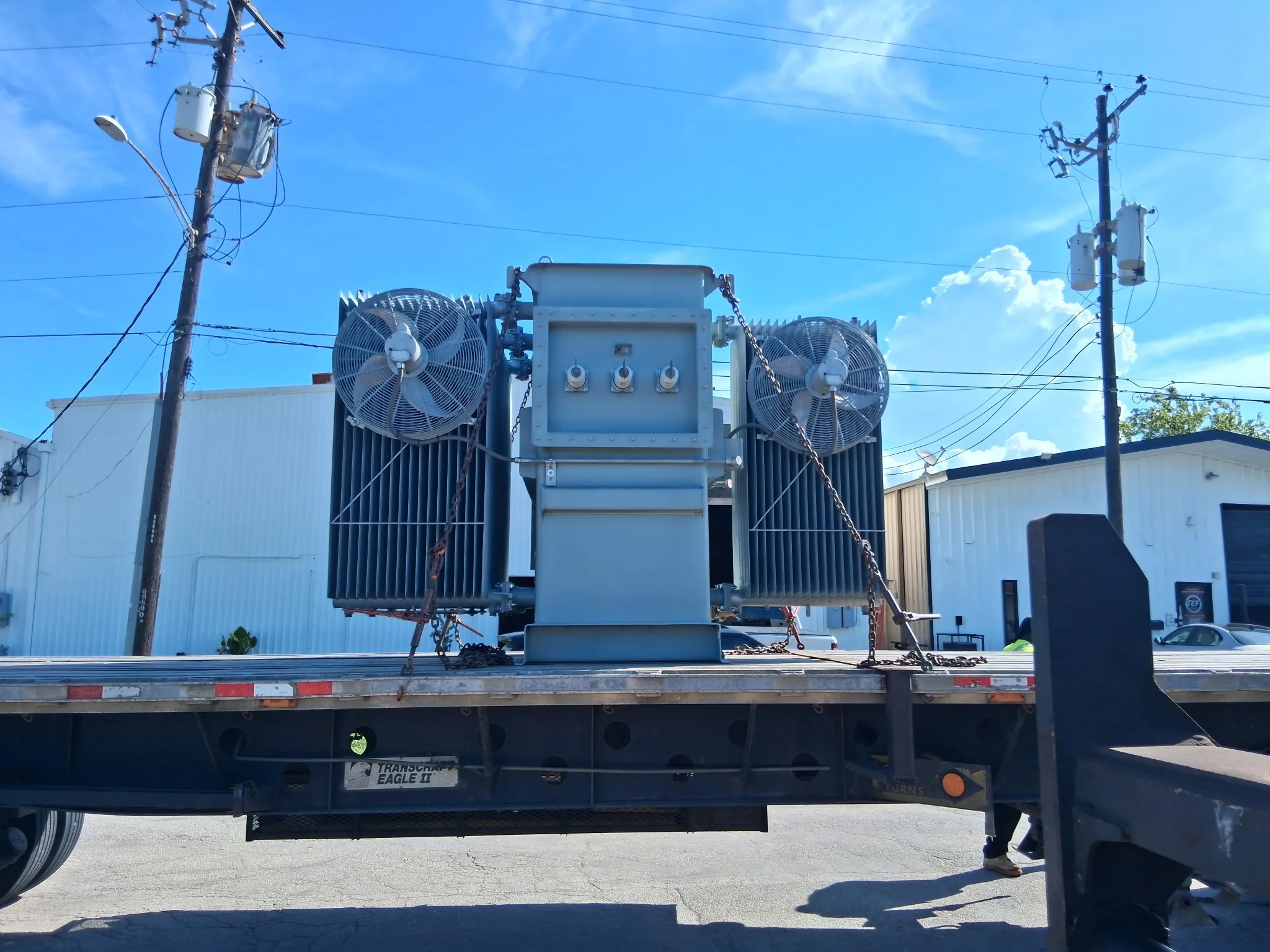
Oil-filled configurations that change the review
Exterior shape and capacity alone do not establish interchangeability. Identify the actual construction and electrical arrangement shown by the equipment and its records.
- Pole-mounted distribution transformers are commonly single-phase, externally bushed units. Their voltage ratio, secondary arrangement, tank condition, and intact mounting and terminal features matter more to reuse review than a generic ‘oil transformer’ description.
- Pad-mounted transformers place high- and low-voltage terminations inside a lockable front compartment. Single- and three-phase units, loop-feed arrangements, dead-front elbow interfaces, and live-front bushings should be identified from the nameplate and photographs rather than assumed from the cabinet shape.
- Unit-substation and larger power-transformer assemblies may include radiators, fans, conservators, pumps, gauges, bushings, arresters, cable boxes, and control cabinets. Review considers the transformer as configured, not simply its core-and-coil rating.
- Liquid dielectric may be mineral oil, natural ester, synthetic ester, or unknown. Fluid identity and documented service history are separate from electrical condition and should be reported as known, unknown, or supported by records.
What can support potential reuse
Electrical fit is configuration-specific
Potential reuse depends on a usable match of kVA or MVA rating, primary and secondary voltages, phase count, winding connection, neutral arrangement, frequency, taps, impedance, and insulation level. A transformer with a strong rating but an unusual vector group, terminal interface, or control arrangement may suit a narrower set of projects.
Identity and traceability reduce uncertainty
A legible manufacturer nameplate, serial number, model designation, year, and wiring or connection data let a reviewer distinguish a standard distribution unit from a specialized, regulating, or application-specific transformer. DOE’s definition itself separates liquid-immersed distribution transformers from several special designs.
Completeness affects review
Intact bushings or separable connectors, terminal compartment parts, radiators, gauges, fans, arresters, control cabinetry, and removable accessories should be shown and listed. Missing components do not automatically end review, but they change the scope and uncertainty of a potential reuse path.
Documented history is more useful than assumptions
Existing commissioning, maintenance, repair, oil-analysis, or outage records can clarify service context without requiring the seller to conduct new tests. Report known defects honestly, including alarms, leak history, damage, or reasons for removal.
More straightforward review situations
- Complete, identified liquid-immersed units removed during a planned utility, industrial, commercial, renewable-energy, or facility upgrade, with readable ratings and a clear custody history.
- Common distribution configurations whose voltage ratio, phase, terminals, and tap arrangement are documented, even when the unit is stored rather than presently installed.
- Larger units with accessible records and photographs of the complete cooling and control system, physical dimensions, and the current site setting.
- Equipment with established fluid documentation and an orderly removal window, subject to review of all other technical and logistical details.
Factors that can limit a reuse path
- Missing or unreadable nameplates, uncertain primary or secondary voltage, undocumented phase/winding connection, or serial-number ambiguity prevents a meaningful compatibility review.
- Unknown fluid type or absent PCB documentation can materially limit the options considered. Under EPA rules, certain pre-July 2, 1979 mineral-oil equipment without an established concentration must be assumed PCB-contaminated; unknown manufacture date has its own regulatory assumption.
- Visible tank corrosion, active or historic leaks, impact damage, damaged bushings, open cable compartments, missing cooling equipment, or reported internal faults increase uncertainty and may make reuse difficult.
- Special-purpose, nonstandard impedance, uncommon taps, incompatible terminations, incomplete substation assemblies, restricted site access, or an unplanned outage can make a case difficult even when the rating is attractive.
Specifications and documents to send
Copy ratings exactly as shown. Do not convert, round, or assume missing values. When available, include original drawings, manuals, service records, and photographs that connect the records to the serial-numbered asset.
- Manufacturer, model or catalog number, serial number, approximate manufacture year, and photographs of the full nameplate.
- Rated capacity, phase, frequency, cooling designation, temperature-rise information where shown, and any forced-cooling stages or auxiliary equipment.
- High- and low-voltage ratings, winding connection or vector information, grounded-neutral details, and all listed tap positions, tap range, and tap-changer type.
- Percent impedance, basic impulse insulation level (BIL) or insulation class where present, and impedance/tolerance documentation if available.
- Primary and secondary terminal style and layout: bushings, dead-front elbows, cable box or throat, neutral provisions, and visible connection hardware.
- Overall dimensions, shipping or nameplate weight if available, radiator/fan/conservator configuration, and whether accessories are included with the unit.
- Known operating role, reason for removal, last known energized date, service/repair history, and records of relay operations, alarms, or abnormal events.
Condition and completeness checks
- Photograph all sides of the tank, base, lifting provisions, nameplate, terminal areas, radiators, gauges, control cabinets, and any labels. Use clear wide and close views; do not open sealed areas for photographs.
- Describe observable oil staining, corrosion, dents, damaged paint, broken or missing bushings, disconnected leads, wildlife intrusion, standing water, or unsecured doors. State what is observed, not a diagnosis.
- Identify whether radiators, fans, pumps, conservator, pressure-relief devices, temperature indicators, liquid-level indicators, arresters, controls, and cables are present, absent, or unknown.
- Provide existing fluid records, PCB labels, manufacturer fluid information, and dated laboratory reports if they already exist. Do not characterize the unit as non-PCB, reusable, compliant, or clean based only on appearance.
- Share available maintenance, factory test, commissioning, repair, and decommissioning records, while redacting personal data, account credentials, proprietary site-security details, and unrelated customer information.
- Confirm ownership authority, storage location, release timing, and whether any utility, landlord, lender, or site approval is needed before an inspection, release, or removal discussion.
Use existing safe access only
Do not enter restricted electrical spaces, defeat locks, remove covers from energized or unknown equipment, sample fluid, or perform testing for this web review. The owner’s qualified personnel control electrical, environmental, and site-safety work.
Examples of useful seller submissions
Utility replacement: pad-mounted three-phase unit
A utility contractor has a surplus pad-mounted transformer following a neighborhood modernization. The strongest submission includes nameplate and compartment photographs, voltage and loop-feed details, serial number, stored location, existing fluid records, and whether elbows, arresters, and control parts remain. A review can then assess technical fit and site feasibility without assuming the unit’s fluid status or promising collection.
Facility shutdown: indoor unit-substation transformer
A manufacturer retires an indoor liquid-filled substation transformer as part of a plant closure. The seller provides rating and connection information, radiator/fan/control inventory, service records, room photos, dimensions, and the building’s release window. Restricted access, stair or doorway constraints, remaining energized equipment, and missing cooling components are material facts that may change the review.
Solar or storage project: specified spare
A project owner holds an unused or lightly used spare with a known voltage ratio and documented tap settings. The owner submits the full nameplate, original procurement or factory documents, storage conditions, all accessory photos, and a statement of why the spare was never commissioned. This is more informative than calling it ‘new,’ and it avoids any unsupported claim about condition or value.
Legacy pole-top unit: uncertain records
A property manager finds a removed oil-filled pole transformer with faded markings and no service file. They photograph the exterior and every label, report the estimated vintage as uncertain, and do not attempt to inspect internally, sample liquid, or move it. Because EPA regulatory assumptions depend on manufacture date, fluid, and documentation, an unknown-history unit requires a more cautious case review.
Removal and freight information
- Removal planning starts only after technical and site review. Sellers should supply the transformer’s current location, accessible approach photographs, approximate dimensions/weight if documented, ground-level or elevated placement, and any stated site constraints. This is planning information, not a pickup commitment.
- A qualified electrical authority should control isolation and release. OSHA explains that equipment is treated as energized unless applicable deenergizing requirements are met; the seller should not rely on a buyer’s review as authorization to disconnect or handle it.
- For a pad-mounted or substation unit, identify associated switchgear, cables, protection controls, fencing, foundations, containment features, and whether they remain with the site. Do not remove accessories or drain fluid to make freight easier without direction from qualified parties and applicable requirements.
- If fluid or equipment is regulated for transport, shipment preparation must be handled by responsible, properly qualified parties. Federal hazmat rules set requirements for preparing hazardous-material shipments; classification and paperwork cannot be inferred from a generic transformer description.
- A practical freight review considers loading-space access, overhead and roadway restrictions, staging area, site scheduling, and whether a suitable contractor can be coordinated. Nationwide review does not mean every location, transformer, or removal condition can be served.
Frequently asked questions about oil-filled transformers
What information should I send first?
Send legible nameplate photographs, overall and terminal-area photographs, the location, quantity, available dimensions or documented weight, known configuration, reason for removal, current storage status, and any existing maintenance or fluid records. Clear information is more useful than a guessed rating.
Do you buy every oil-filled transformer?
No. Each item is reviewed individually for technical compatibility, documentation, condition, completeness, access, and logistics. Sending information does not create a purchase obligation for either party.
Can a photo determine the transformer’s value or condition?
No. Photographs help identify configuration and visible completeness but cannot establish internal condition, electrical performance, regulatory classification, or a purchase price. Existing records should accompany photographs where available.
Do I need to test or drain the transformer before requesting review?
No. Do not perform testing, fluid handling, disconnection, or movement solely for a review request. Share existing reports and let the owner’s qualified electrical, environmental, and lifting professionals determine any work required under applicable site procedures.
Can you arrange removal anywhere in the United States?
We review equipment nationwide, but removal or freight is considered case by case after technical and site details are known. Location coverage, access, timing, equipment condition, responsible-party approvals, and transportation requirements can all affect feasibility.
Technical and safety references
These government, regulatory, and manufacturer references support the technical and safety context above. They do not inspect the submitted transformer, endorse this business, determine regulatory status, or replace qualified professional review.
- U.S. Department of Energy / eCFR — 10 CFR Part 431, Subpart K: Distribution TransformersDefinitions for liquid-immersed distribution transformers and differentiating features such as voltage, phase, kVA rating, BIL, and configuration.
- U.S. Environmental Protection Agency / eCFR — 40 CFR 761.2: PCB concentration assumptions for useRegulatory assumptions based on equipment manufacture date, fluid type, unknown status, and the documentation that may establish PCB concentration.
- Occupational Safety and Health Administration — Deenergizing Transmission and Distribution Lines and EquipmentHigh-level safety context: equipment may be treated as deenergized only when applicable requirements are met, including qualified personnel, isolation, verification, and protective grounding.
- Occupational Safety and Health Administration — 29 CFR 1910.184: SlingsHigh-level removal context requiring properly identified, inspected, undamaged lifting equipment used within rated capacity; no rigging procedure is provided in this guide.
- U.S. Department of Transportation / eCFR — 49 CFR Part 173: Shippers—General Requirements for Shipments and PackagingsConditional freight context: hazardous-material shipments must be prepared in accordance with applicable federal transportation requirements.