Review scope: Nationwide, case-by-case equipment review. This guide does not promise purchase, price, testing, environmental classification, local presence, freight, or pickup.
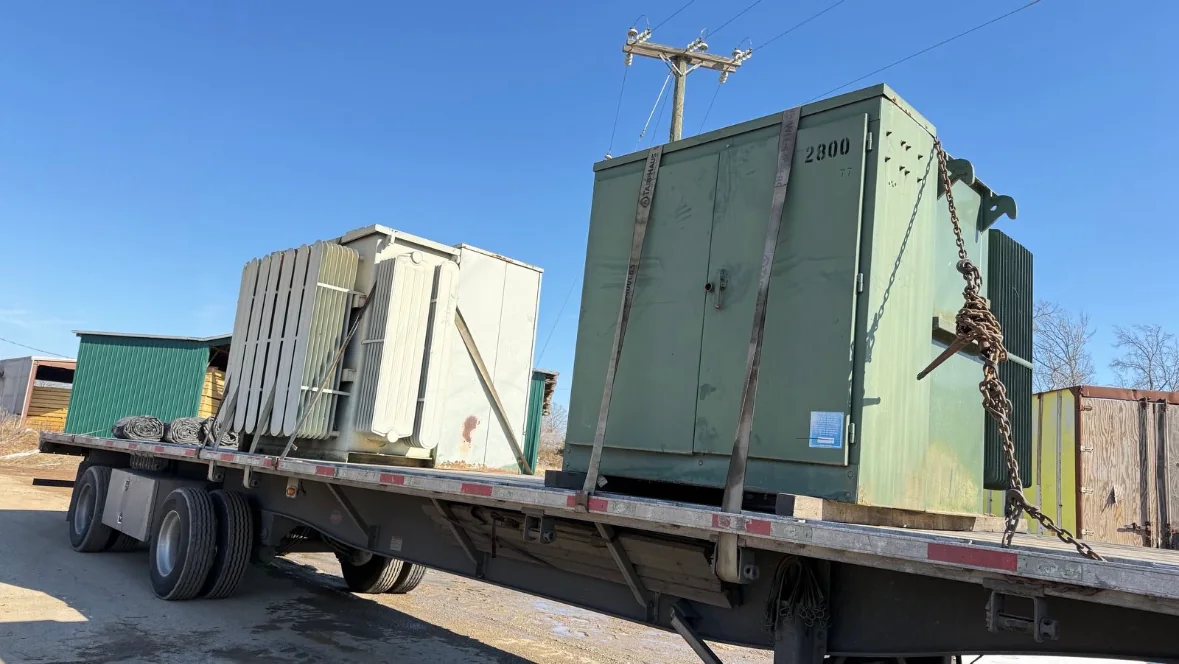
Pad-mounted configurations that change the review
Exterior shape and capacity alone do not establish interchangeability. Identify the actual construction and electrical arrangement shown by the equipment and its records.
- Single-phase conventional pad-mounts commonly serve residential or light commercial underground distribution; three-phase compartmental units are more typical at commercial, industrial, institutional and utility sites.
- Dead-front units use insulated, separable primary interfaces within the compartment; live-front units use exposed bushing arrangements. The distinction affects compatible cable terminations, safety controls and the likely end use.
- Radial-feed designs receive a single primary circuit, while loop-feed designs provide an incoming and outgoing primary path. A loop layout is not interchangeable with radial service simply because the kVA matches.
- A pad-mounted unit may be step-down, step-up or purpose-designed for critical load, solar or other applications. Primary and secondary winding connection, not exterior appearance, establishes its electrical identity.
What can support potential reuse
Nameplate traceability
Manufacturer, serial number, model or catalog number, manufacture date and an unobstructed nameplate photo allow the reviewer to match the unit to its original design. A readable tag reduces uncertainty around electrical configuration, fluid and accessories.
Electrical compatibility
The strongest reuse signal is a coherent combination of phase, kVA, primary voltage and connection, secondary voltage and connection, taps, frequency, BIL and impedance. A rating that is common in one utility territory may still be unsuitable for another system.
Complete compartment package
Original doors, latches, sill, bushings or inserts, connectors, neutral hardware, switches, fuses, arresters and gauges should be documented as present or missing. These items affect both technical compatibility and the work needed to prepare a unit for a future application.
Documented stewardship
Clear title or authorization to sell, service history, decommissioning records, prior inspection reports and any fluid paperwork help distinguish known facts from assumptions. Provide originals or copies without representing them as current test results.
More straightforward review situations
- Later-model, identifiable pad-mounts with intact tanks and compartments, a readable nameplate, known service history and no reported damage are generally more straightforward to review for potential reuse.
- Three-phase commercial or industrial units with ordinary utility-style voltage, connection and feed arrangements can be reviewed efficiently when their terminal layout and accessories are photographed clearly.
- Matched groups from a planned upgrade are useful when each serial number, rating and site condition is listed separately rather than described as a single lot.
- Unused or spare units can be considered when storage history, date code, fluid identity and completeness are documented; unused appearance alone does not establish condition.
Factors that can limit a reuse path
- Missing nameplates, altered labels or undocumented rewinds make voltage, connection, impedance and provenance difficult to establish.
- Unknown manufacture date or dielectric fluid may trigger PCB-related assumptions under federal rules; do not label an undocumented unit non-PCB or suitable for any particular handling route.
- Active leakage, residue, heavy corrosion, tank deformation, fire evidence, submerged exposure or compromised bushings require a more limited, safety-conscious review.
- Nonstandard secondary voltages, unusual vector groups, special switching or protection packages, incomplete cable interfaces, and inaccessible sites can narrow potential reuse or change the practicality of removal.
Specifications and documents to send
Copy ratings exactly as shown. Do not convert, round, or assume missing values. When available, include original drawings, manuals, service records, and photographs that connect the records to the serial-numbered asset.
- Capture a sharp image of the entire nameplate and transcribe manufacturer, serial number, model/catalog number and date. Include all labels, not only the kVA line.
- State phase, base kVA, frequency, cooling designation and rated temperature rise if shown. DOE defines the ordinary liquid-immersed distribution-transformer category by electrical range and rating, but a pad-mounted enclosure can contain special-purpose features that must also be identified.
- Record the high-voltage nominal rating, winding connection (delta or wye), grounded-neutral notation, BIL and every tap position or tap range. Note whether the tap switch is visibly present; do not operate it for photographs.
- Record the low-voltage rating, connection, neutral arrangement, BIL and terminal type, including stud, spade or other connection interface. Report the exact printed voltage, such as a wye designation, rather than converting it to a shorthand description.
- List impedance, vector/phase displacement if shown, and any fan, gauge, pressure-relief, loadbreak switch, vacuum interrupter, fuse, breaker, arrester, meter or current-transformer equipment. These are material to application matching.
- Identify the primary arrangement as radial or loop and the front as dead-front or live-front. Wide manufacturer offerings confirm that these construction choices and accessories vary substantially among pad-mounted units.
- Supply dimensions, the nameplate or manufacturer-stated weight if available, tank material, and stated fluid type. Estimate neither fluid volume nor lifting weight from kVA or cabinet size.
Condition and completeness checks
- From a safe exterior position, photograph all sides, the top, each closed compartment, base, labels, lifting provisions and surrounding ground. Do not defeat locks or open energized or unknown equipment.
- Report visible oil staining, wetness, corrosion, dents, paint loss, cracked porcelain or polymer components, missing doors, damaged latches, broken gauges and evidence of impact or fire.
- Confirm whether the unit is connected, isolated or simply described by the site owner as out of service. Only the owner and qualified electrical personnel should establish its electrical status.
- Note whether original terminal components, fuses, switches, arresters, neutral straps and cable hardware remain installed. A removed cable is not evidence that the transformer is de-energized.
- Share known maintenance, alarm, trip, failure, flood, storage and repair history plainly, including unknowns. Do not clean, drain, sample or energize the transformer to improve a sale presentation.
- Preserve any PCB, fluid, safety and serial-number markings in photographs. Federal rules specify assumptions for undocumented older oil-filled equipment; a buyer review does not replace regulatory classification.
Use existing safe access only
Do not enter restricted electrical spaces, defeat locks, remove covers from energized or unknown equipment, sample fluid, or perform testing for this web review. The owner’s qualified personnel control electrical, environmental, and site-safety work.
Examples of useful seller submissions
Office-campus upgrade with a complete three-phase unit
A facilities team replaces a three-phase dead-front loop-feed transformer during a service upgrade. It submits nameplate, serial, compartment-layout and exterior photos, the old one-line, service history, access notes and a statement that qualified personnel will control isolation. The reviewer can assess the exact primary/secondary match, protection package, completeness and site practicality without treating the submission as proof of condition or a purchase commitment.
Retail-center transformer with an unfamiliar secondary
A seller has a clean-looking radial-feed unit but its low-voltage label shows an uncommon connection. Instead of calling it a standard commercial transformer, the seller photographs the nameplate, bushings, neutral arrangement, taps and all accessories. The unusual secondary may limit likely reuse channels, but accurate disclosure prevents a misleading comparison based solely on kVA.
Legacy unit from a redevelopment site
The nameplate is weathered, the manufacture date cannot be read and the fluid is undocumented. The seller leaves all labels and fluid undisturbed, reports the uncertainty and supplies site records if available. Under 40 CFR Part 761, undocumented older mineral-oil-filled equipment can carry PCB assumptions; the correct next step is compliance-aware documentation and case-specific review, not a claim that the unit is environmentally cleared.
Stored spare with missing accessories
A utility contractor offers a spare pad-mount that was kept in a yard after a project. The tank is intact, but one door-mounted component and several cable interfaces are missing. By documenting storage duration, manufacturer data, missing parts, exterior condition and secure loading access, the seller allows the reviewer to distinguish a potentially restorable configuration from a complete ready-to-apply unit.
Removal and freight information
- Send the unit's street address, whether it is indoors or outdoors, ground and approach conditions, gate or escort requirements, clearance constraints, hours, site contacts and whether the concrete pad or cables remain. Nationwide review does not mean pickup is available for every site or unit.
- Before removal planning, have the owner coordinate with qualified electrical personnel and the serving utility as applicable. OSHA requires de-energization, lockout/tagout and qualified verification for exposed electrical work; sellers should not rely on a disconnected-looking cable or open door.
- Provide manufacturer-stated or nameplate weight and dimensions when available, plus photos of lifting and jacking provisions. The removal contractor, not the seller, must select, inspect and use suitable rigging and transport equipment.
- Do not drain fluid, remove bushings, cut grounding conductors, open sealed compartments or use improvised lifting points to make a unit easier to ship. Keep the transformer upright and protected according to the responsible carrier's and owner's site plan.
- Separate any removal scope from the equipment review: access, electrical isolation, environmental responsibilities, crane or forklift availability, permits, packaging and freight are confirmed only after a specific site and unit are evaluated.
Frequently asked questions about pad-mounted transformers
Do you buy every pad-mounted transformer?
No. We conduct nationwide, case-by-case equipment review. Electrical compatibility, condition, documentation, environmental information, completeness, location and removal practicality all matter. A request for information is not a promise to buy or arrange pickup.
What should I send for an initial review?
Send the full nameplate, serial number, manufacturer/model, exterior and compartment photographs taken safely, phase and voltage details, known fluid and service history, a list of missing accessories, address, access constraints and proof that you are authorized to sell. A one-line diagram is helpful when available.
Can a kVA rating alone establish value or interchangeability?
No. kVA is only one rating. Primary and secondary voltage, winding connection, phase, frequency, BIL, impedance, taps, front/feed arrangement and protective components may control whether a unit fits a subsequent application.
Do you need a current electrical or fluid test?
Share any existing reports and their dates, but do not create tests or samples for the review unless your owner, compliance team and qualified providers determine they are needed. We do not represent an initial review as testing, certification or environmental classification.
May we disconnect, drain or prepare the transformer before contact?
Do not alter the unit simply to market it. Electrical isolation and removal must be planned by the owner with qualified personnel; OSHA's rules address de-energization and verification. Keep labels, fluid and components intact, then provide the site details so removal needs can be evaluated safely.
Technical and safety references
These government, regulatory, and manufacturer references support the technical and safety context above. They do not inspect the submitted transformer, endorse this business, determine regulatory status, or replace qualified professional review.
- U.S. Department of Energy — Distribution TransformersFederal distribution-transformer scope, efficiency-rule context and compliance dates.
- eCFR — 40 CFR Part 761, Polychlorinated BiphenylsPCB transformer definitions, assumptions for undocumented older oil-filled equipment, marking and record provisions.
- OSHA — 29 CFR 1910.333, Selection and Use of Work PracticesDe-energization, lockout/tagout and qualified verification requirements for electrical work.
- OSHA — 29 CFR 1926.251, Rigging Equipment for Material HandlingInspection, identification and rated-capacity requirements for rigging equipment.
- Eaton — Three-Phase Pad-Mounted TransformerManufacturer technical reference for pad-mount ratings, dead-front/live-front configurations, BIL and application variants.